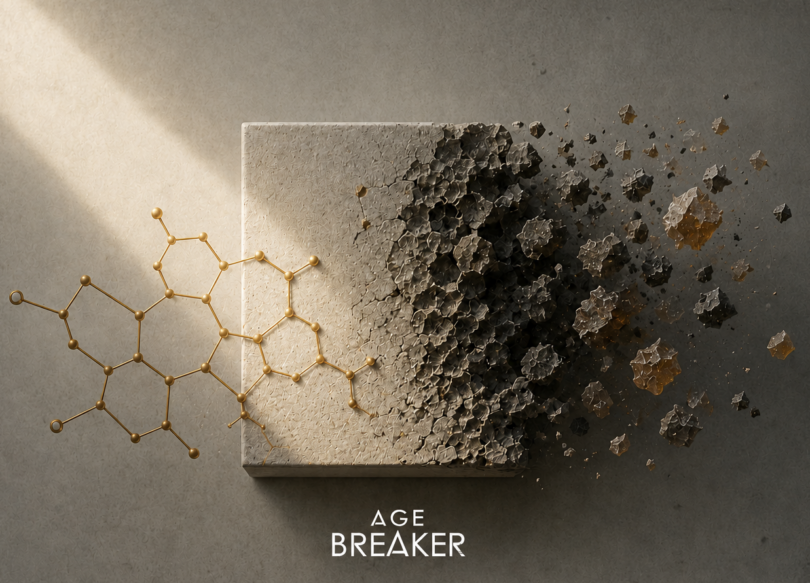
What do wrinkles, osteoarthritis, cataracts, diabetic complications, certain neurodegenerative disorders, and aging itself all have in common?
Glycation.
The chemical reaction between sugars and proteins, glycation is now recognized as a key driver of aging and numerous age-related diseases. Long overlooked by biomedical research, it has gained significant scientific attention since the early 2000s. In a world characterized by excessive sugar consumption, its effects are impacting increasingly large populations and may even extend across generations through epigenetic mechanisms. The emergence of strategies designed to limit – or potentially reverse – its effects is opening new avenues in longevity science.
Glycation: An Underrecognized Driver of Aging
Glycation results from the non-enzymatic binding of sugars to proteins and other biological molecules. First described in 1911 by French physician and chemist Louis-Camille Maillard, the process is also known as the Maillard reaction.
For decades, glycation remained largely outside the focus of biomedical research. Today, however, it has become a major area of investigation in aging biology and age-related diseases. More than 15,000 scientific publications addressing glycation had been indexed by 2025, reflecting rapidly growing interest in its biological and clinical implications.
A Threat Amplified by Modern Lifestyles
These scientific advances coincide with the global rise of ultra-processed foods and excessive consumption of added sugars, making the consequences of glycation increasingly widespread.
More concerningly, glycation may not be limited to its direct physiological effects. Through epigenetic pathways, it could contribute to an accelerated aging trajectory across growing segments of the population, raising important questions about its long-term societal impact.
From Biological Inevitability to Therapeutic Target?
From biological inevitability to therapeutic opportunity: targeting glycation to redefine longevity.
As researchers continue to unravel the complexity of Advanced Glycation End Products (AGEs) – the toxic compounds generated during the final stages of glycation – and their receptors (RAGEs), new opportunities are emerging to address the damage they cause.
Among the most promising developments is the emergence of deglycation technologies and molecules capable of directly targeting the molecular causes of glycation, rather than merely slowing its downstream consequences.
This shift has profound implications: glycation is increasingly viewed not as a biological inevitability, but as a therapeutic target.
© AGE Breaker 06 2026
Glycation is one of the major drivers of aging. Resulting from the binding of sugars to the body’s proteins, glycation generates toxic compounds that contribute to cellular aging. Glycation is involved in metabolic disorders, musculoskeletal and skin aging, cognitive decline and numerous age-related diseases.
AGE Breaker, glycation and longevity science.
(1): PubMed® 06 2026 https://pubmed.ncbi.nlm.nih.gov/